LUUM.IO
X-PoE FIXTURE INTEGRATION GUIDE#
About This Guide#
This comprehensive guide is designed to walk you through the step-by-step process of integrating a lighting fixture with an X-PoE Powered Device (XPD). By following these detailed instructions, you'll be able to successfully establish a connection between your lighting fixture and the X-PoE XPD, enabling efficient power delivery and lighting control.
Power Specifications#
With X-PoE, the lighting drivers are contained within the lighting controller, so there is no need for a driver or other electronics in the light fixture. But there are some power constraints to consider. See the X-PoE Integrated LED Driver Specification for more information.
XPD Overview#
The XPD takes the RJ45 connection from an X-PoE port and converts it to one or two separate channels, each with a pair of positive (+) and negative (-) conductors. These channels are used for powering LEDs or other compatible devices, and can be daisy-chained to extend the power delivery to additional fixtures or devices. The XPD can be integrated (or not integrated) with the fixture in the following ways:
| EFFORT | EXAMPLE APPLICATION | HOW IT SHIPS FROM THE FACTORY | HOW IS IT INSTALLED IN THE FIELD |
|---|---|---|---|
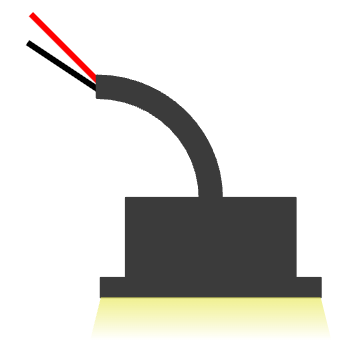
| None | - LED tape - Downlights without a wiring compartment |
 |
 |
- What does it mean to me as a manufacturer?
- There is no action required, other than removing any LED drivers.
- What's good about this integration level?
- There is no action needed from the manufacturer.
- Fixtures are channel selectable in the field based on which XPD channel they are wired up to.
| EFFORT | EXAMPLE APPLICATION | HOW IT SHIPS FROM THE FACTORY | HOW IS IT INSTALLED IN THE FIELD |
|---|---|---|---|
| Low | - Fixtures with internal wiring compartments | 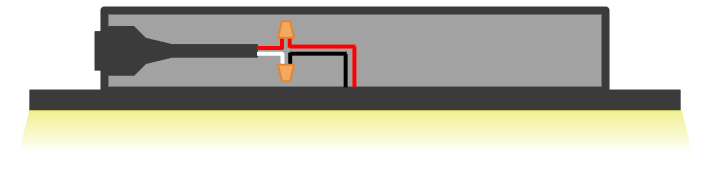 |
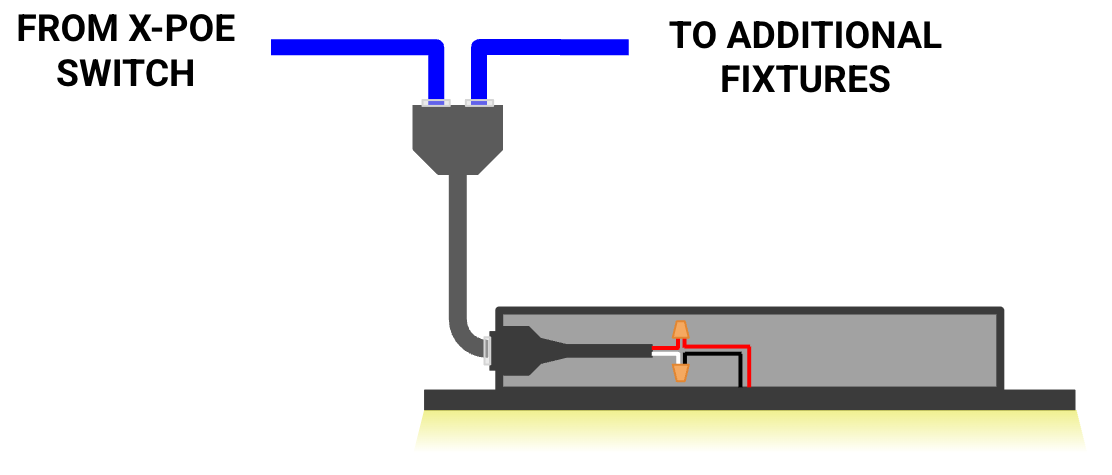 |
- What does it mean to me as a manufacturer?
- Install the XPD at the factory inside the fixture.
- What's good about this integration level?
- Very easy to go through UL, but requires a new component to be sourced.
| EFFORT | EXAMPLE APPLICATION | HOW IT SHIPS FROM THE FACTORY | HOW IS IT INSTALLED IN THE FIELD |
|---|---|---|---|
| High | - Low power fixtures where daisy chaining is common | 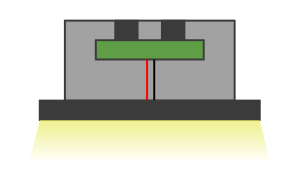 |
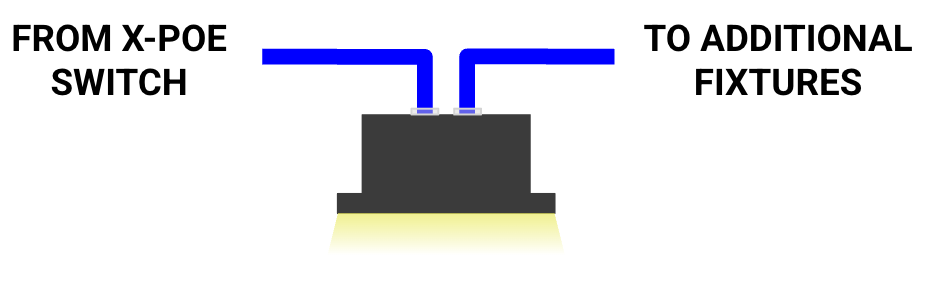 |
- What does it mean to me as a manufacturer?
- Custom circuit board and design of fixture. Full UL certification required.
- What's good about this integration level?
- Most elegant and streamlined.
Additional information on the XPD integration levels can be found below:
Level 0 XPD Integration#
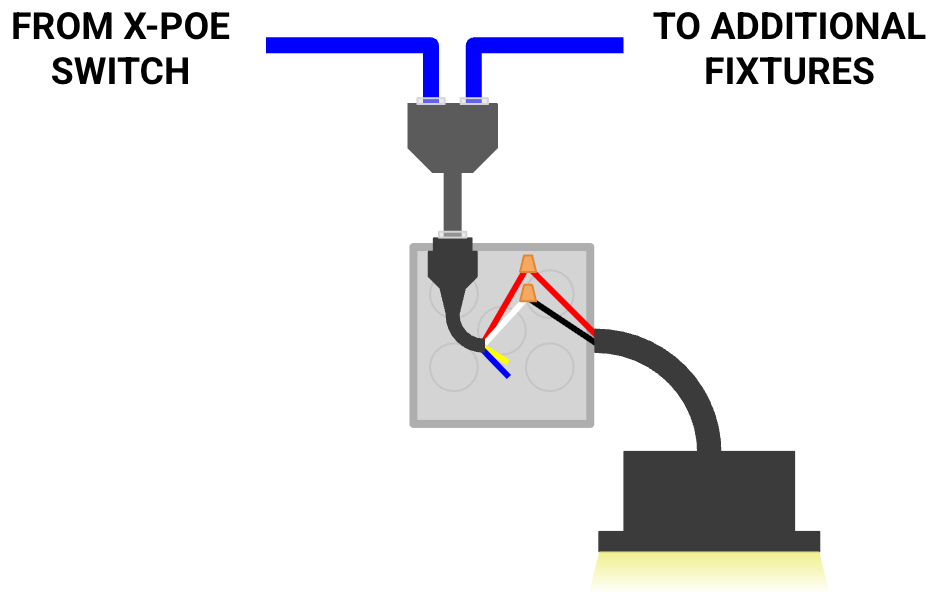
This level of integration involves little to no effort from the fixture manufacturers, and is largely done on site by the installer. The light fixture ships driverless with flying leads, and the fixture XPD (XPD-P2H-G or XPD-T2P-G) is connected to the fixture on site. It is recommended that the XPD be installed in a junction box, and the wiring connections made inside the junction box. Only two channel XPDs may be used for this integration.
One Channel Fixture#
- The number of fixtures on a port needs to be calculated on a per channel basis. For example:
- Only one 700mA fixture will fit on a channel. This means that only two fixtures will fit on the port, even though the fixtures total 1.4A, and the total power budget for the port is 2.3A.
- Which channel the fixture connects to need to be taken into consideration at each XPD. For example:
- When daisy chaining multiple fixtures, the first fixture (or group of fixtures) will need to be wired to channel one, and the next fixture (or group of fixtures) will need to be wired to channel two.
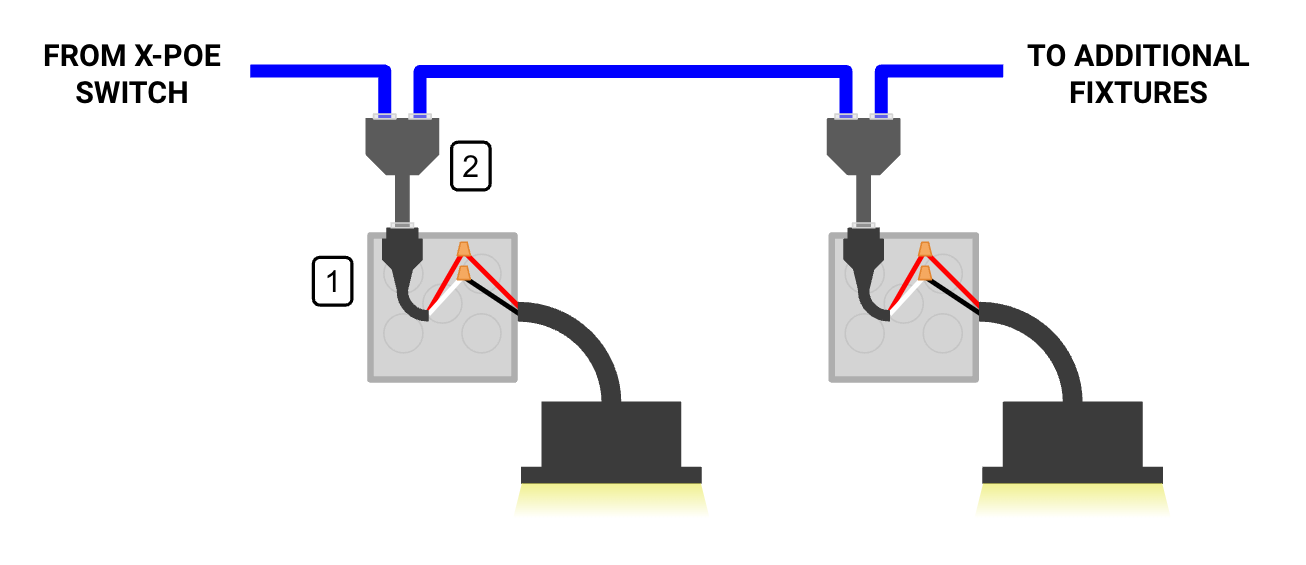
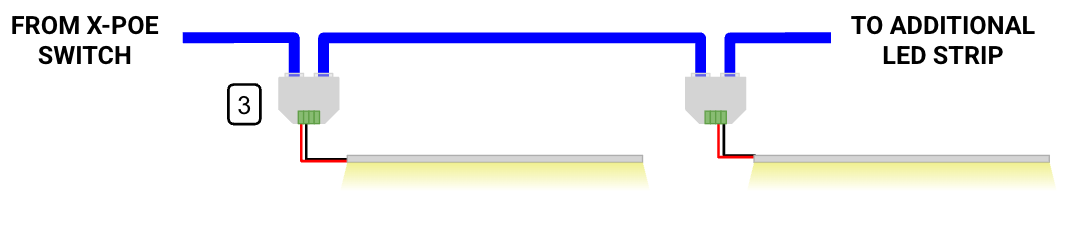
- Fixture XPD (XPD-T2P-G), to be installed on site.
- Daisy Chain Splitter, only required for daisy chaining fixtures.
- LED Strip XPD (XPD-P2H-G), to be installed on site.
Note
The first fixture is wired to channel one (red/white), and the second fixture is wired to channel two (yellow/blue).
Two Channel Fixture#
- Fixtures that have multiple LED boards for color tuning or directional lighting can utilize the full 2.3A of the port. The power can be divided amongst the LED boards, and there is no specific channel wiring to take into consideration when daisy chaining.
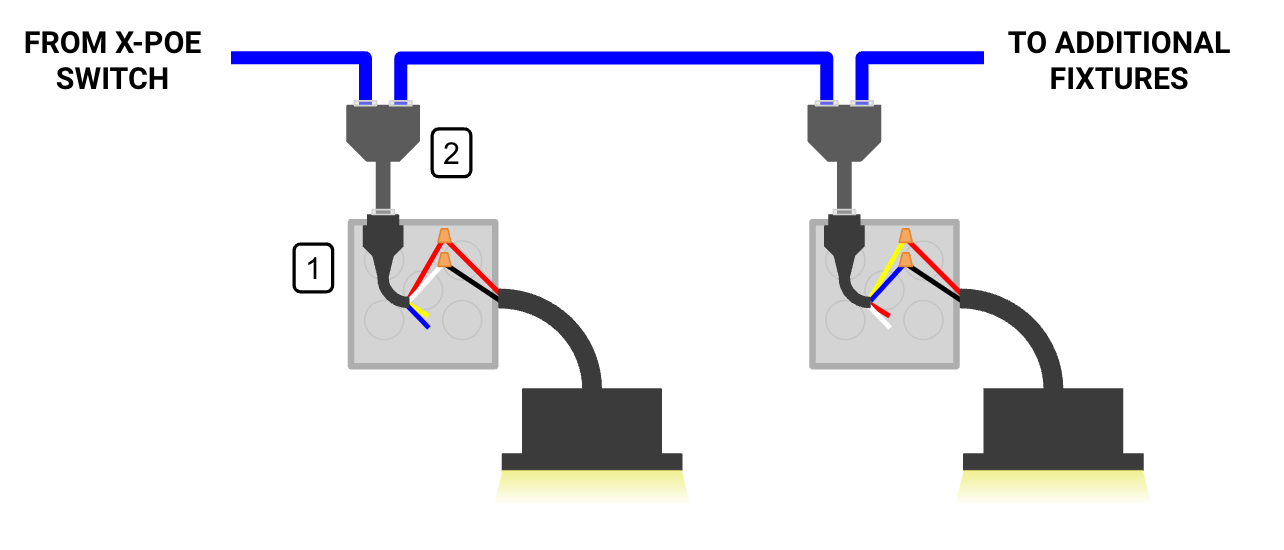
- Fixture XPD (XPD-T2P-G), to be installed on site.
- Daisy Chain Splitter, only required for daisy chaining fixtures.
Note
Even if a fixture doesn’t support color tuning or directional lighting, it may still contain multiple LED boards. In these cases, both channels should still be used within the fixture to distribute power effectively and avoid channel specific wiring.
Fixture Manufacturers#
To be compatible with this level of integration, the light fixture will need to ship with no driver, and wire leads from the LED board(s) coming out of the fixture.
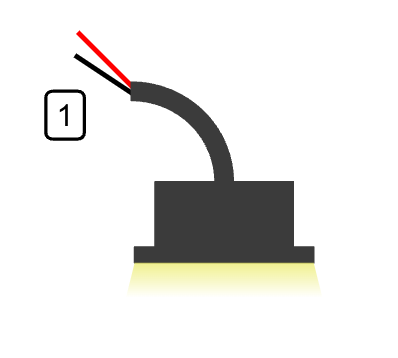
- Whip with positive and negative wire leads connecting directly to the LED board(s).
Level 1 XPD Integration#
This level of integration involves minimal effort from the fixture manufacturers, but is only compatible with fixtures that have existing wiring compartments. The fixture manufacturer installs a generic, off the shelf XPD before it is shipped to the site, and the fixtures arrive ready to be connected to the X-PoE ethernet wiring. A one or two channel XPD may be used for this integration.
One Channel Fixture#
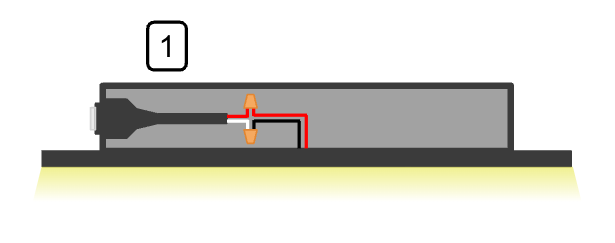
- Unless the fixture has multiple LED boards for color tuning or directional lighting, a one channel XPD will be used. The XPD will be installed and wired to the LED board before being shipped to the site.
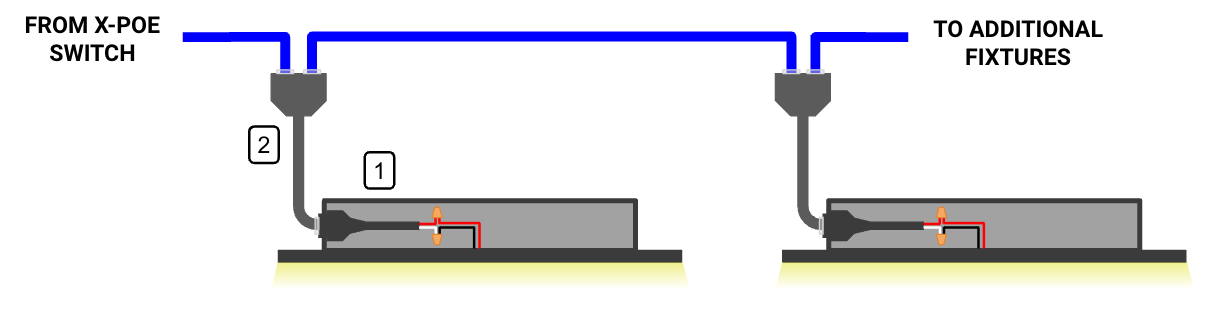
- Fixture with XPD (XPD-T1P-G) installed from manufacturer.
- Daisy Chain Splitter, only required for daisy chaining fixtures.
Note
The XPD installation must happen at the manufacturer, and the wiring connections must be internal to the fixture.
Two Channel Fixture#
- Fixtures that have multiple LED boards for color tuning or directional lighting will use the two channel XPD. The XPD will be installed and wired to the LED boards before being shipped to the site.
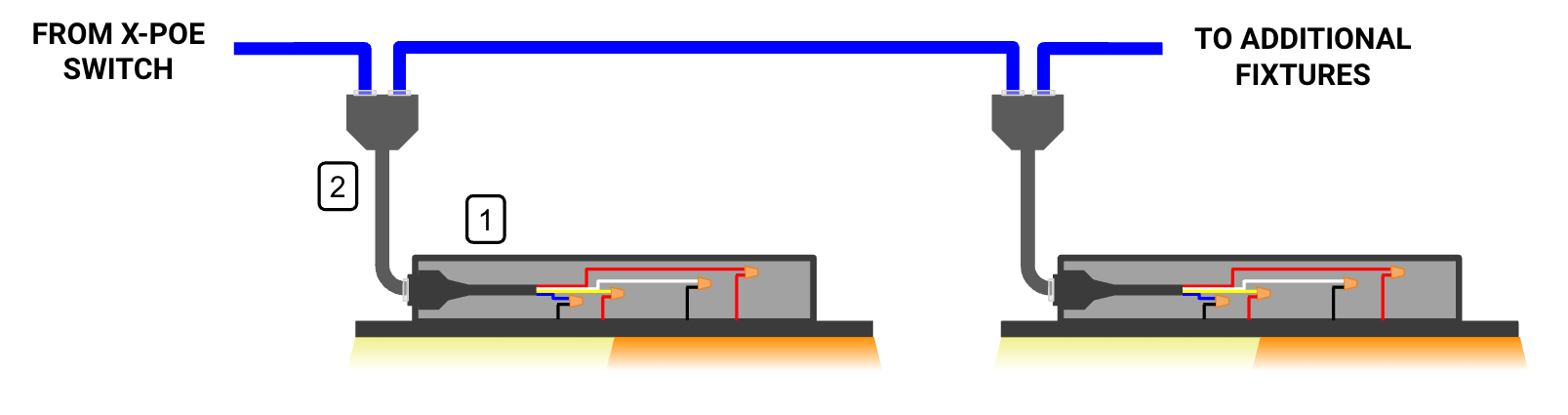
- Fixture with XPD (XPD-T2P-G) installed from manufacturer.
- Daisy Chain Splitter, only required for daisy chaining fixtures.
Note
Even if a fixture doesn’t support color tuning or directional lighting, it may still contain multiple LED boards. In these cases, both channels should still be used within the fixture to distribute power effectively.
Fixture Manufacturers#
To be compatible with this level of integration, the light fixture will need to have a wiring compartment, and ship with a fixture XPD (XPD-T1P-G or XPD-T2P-G) already installed.
Level 3 XPD Integration#
This level of integration involves the most effort from the fixture manufacturer. However, it is the most optimized method for integrating fixtures with the X-PoE system. The light fixture ships with an integrated XPD circuit, and has RJ45 port(s) ready to be connected to the X-PoE ethernet wiring. Both channels are available to be used within the light fixture.
X-PoE Light Fixture#
- The XPD is integrated into the light fixture. Both channels are available for fixtures with a single LED board, as well as fixtures that have multiple LED boards for color tuning or directional lighting.
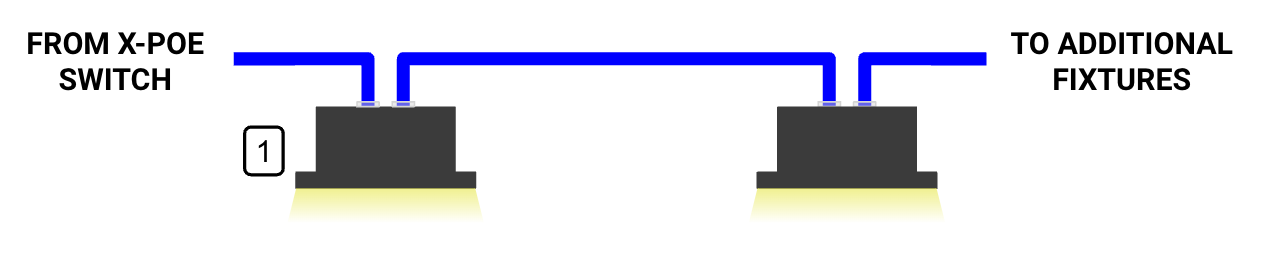
- X-PoE compatible light fixture with integrated XPD.
Note
A daisy chain splitter will be necessary if the fixture can be daisy chained and the manufacturer can only put a single port on the fixture.
Fixture Manufacturers#
To be compatible with this level of integration, the light fixture will need to have an XPD circuit integrated inside the fixture, as well as RJ45 port(s) exposed as connections to the fixture. Both channels are to be used for fixtures with a single LED board, as well as fixtures that have multiple LED boards for color tuning or directional lighting.
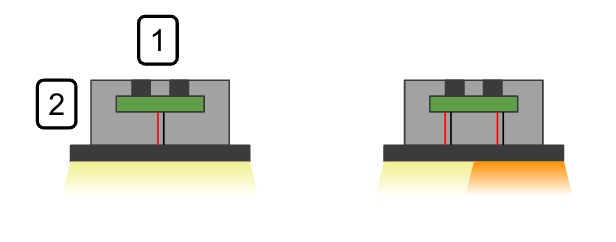
- RJ45 port(s) exposed as connections to the fixture.
- Integrated XPD circuit.
Fixture Type Guidelines#
| FIXTURE | LEVEL 0 | LEVEL 1 | LEVEL 2 | NOTES |
|---|---|---|---|---|
| LED Strips (1150mA segments) |
✅ | ⚠️ | ⚠️ | There is no fixture to integrate an XPD into. XPDs should be field installed in an accessible location. |
| Linear Fixtures (1150mA segments) |
✅ | ⚠️ | ⚠️ | Typically there is no space to integrate an XPD into. XPDs should be field installed in an accessible location. |
| Fixtures < 1150mA (single LED board) |
✅ | ✅ | ✅ | These fixtures need to be balanced across both channels when field installing, or integrated with an aggregate XPD. |
| Fixtures > 1150mA (single LED board) |
❌ | ✅ | ✅ | These fixtures require an aggregate XPD, which needs to be installed in the fixture at the factory. |
| Fixtures < 2300mA (multiple LED boards) |
✅ | ✅ | ✅ | Any integration level is appropriate for these fixtures. Both channels of the XPD will be utilized to power the multiple LED boards. |
| Pendant/Suspended Fixtures | ✅ | ⚠️ | ⚠️ | Typically not ideal to run down/suspend fixtures with CAT6. XPDs should be field installed in an accessible location. |
| Multi-Output Fixtures < 2300mA (color tuning, direct/indirect) |
✅ | ✅ | ✅ | Any integration level is appropriate for these fixtures. Both channels of the XPD will be utilized to power the multiple LED outputs. |
| Fixtures > 2300mA | 📞 | 📞 | 📞 | Contact Luum.io to discuss XPD integration options. |
X-PoE Class#
Apart from converting the RJ45 connection to DC outputs, XPDs also feature signature resistors on each channel. These resistors play a crucial role in helping the X-PoE lighting controller identify the specific X-PoE class associated with the XPD. This class information guides the lighting controller in determining the load's power requirements and facilitates automatic configuration of the X-PoE port. For a detailed breakdown of the various X-PoE classes and their corresponding class signature resistors, please consult the table below:
| Signature Resistor Value | XPOE Class |
|---|---|
| 32k | 300mA Constant Current |
| 13k | 400mA Constant Current |
| 14k | 500mA Constant Current |
| 16k | 600mA Constant Current |
| 6k5 | 800mA Constant Current |
| 10k6 | 900mA Constant Current |
| 7k | 1000mA Constant Current |
| 8k | 1200mA Constant Current |
| 8k5 | 48V Constant Voltage |
| 9k5 | 36V Constant Voltage |
| 11k5 | 24V Constant Voltage |
| 12k5 | Manual Config - Default 100mA |
Note
The placement of the X-PoE class signature resistor is designated for channel one. In the event that the fixture's power requirement exceeds 1,200 mA, one signature resistor on each channel will be used, distributing the load evenly.
X-PoE Fixture Certification Program#
The X-PoE Certification Program is available to fixture manufactures looking to ensure the best performance and integration with the X-PoE system. The X-PoE Certification Team will test the lighting fixtures and store the optimal X-PoE settings for use during system configuration. A XPD solution will be developed for the light fixture, with custom XPD solutions available. The fixture will be fully X-PoE certified and showcased in a database of the best performing X-PoE fixtures available to specifiers.
To certify a light fixture for X-PoE, contact Luum.io.